
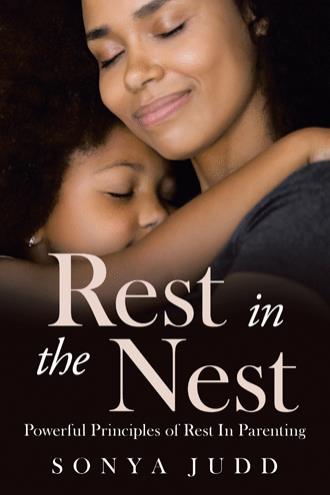
Rest in the Nest
Powerful Principles of Rest In Parenting
by
Book Cover & Preview Text
Introduction: Stop Signs, p.ix lines 1-22
It was like a dream, but I was awake. ere was no milk. I had just enough money to get the other essentials until we got paid on Friday. My Irish-triplet toddlers (three under three) had just fallen asleep, so I only had thirty minutes to scoot to the store and back before they awoke from their 30-minute afternoon nap. I petitioned our neighbor’s teen to watch them for a bit while I went to the store. I started the car. I’m sure it started, but I don’t remember hearing the engine. I cautiously backed out of the driveway. I savored the few scarce moments of peace and quiet, comforted by my little space to let my guard down. As I drove slowly from our home to the edge of the subdivision, my thoughts drifted. When was the last time I was outside? We should cook more food on the grill. Is it time to cut the grass yet? My stomach growled, reminding me I had unintentionally skipped the last two meals. I didn’t care. I sat at the stop sign, lost in my train of thought, looking at the sky and the cars passing by. How nice would it be to just sit here, doing nothing? e warmth of the car lulled me further into my thoughts. A loud horn interrupted my oasis. In the car behind me, a man angrily waved his hands over the steering wheel, motioning me to go. I turned on my left signal and—now alert—proceeded into the intersection for my seven-minute ride to the local grocery store. As I recovered my wits, I realized I had fallen asleep at the stop sign. I would not have believed it was possible to fall asleep at a stop sign. But sleep had seized the opportunity it was given, overtaking me in a mere sliver of rest. In that moment, I recognized the level of desperation into which I had allowed myself to sink. I couldn’t remember sleeping longer than three hours in the last twelve months. e children were on a time As I drove slowly from our home to the edge of the subdivision, my thoughts drifted. When was the last time I was outside? We should cook more food on the grill. Is it time to cut the grass yet? My stomach growled, reminding me I had unintentionally skipped the last two meals. I didn’t moments of peace and quiet, comforted by my little space to let my guard engine. I cautiously backed out of the driveway. I savored the few scarce I started the car. I’m sure it started, but I don’t remember hearing the their 30-minute afternoon nap. I petitioned our neighbor’s teen to watch My Irish-triplet toddlers (three under three) had just fallen asleep, so I only had thirty minutes to scoot to the store and back before they awoke from thoughts drifted. When was the last time I was outside? We should cook more food on the grill. Is it time to cut the grass yet? My stomach growled, As I drove slowly from our home to the edge of the subdivision, my engine. I cautiously backed out of the driveway. I savored the few scarce moments of peace and quiet, comforted by my little space to let my guard I started the car. I’m sure it started, but I don’t remember hearing the x schedule of their own design. When one child woke up, the others woke up too. It was a sadistic game they played with me. Although unintentional, it was nonetheless cruel.
Calendar 101, p. 60, lines 4-11
Often at the root of a very full or over-ripe calendar are unresolved emotional, spiritual, or psychological feelings or issues. Probing questions to ask yourself may reveal: • Fear of self-reflection/self-hatred: in an effort to avoid being alone or seeing yourself, you busy yourself with activity. • Fear of rejection: can’t say “no” to others; afraid others won’t like you if you turn them down. • Lack of self-control: I can do everything that comes my way if…
Personal Planning Pointers, p.71, lines 16-25
Often at the root of a very full or over-ripe calendar are unresolved emotional, spiritual, or psychological feelings or issues. Probing questions to ask yourself may reveal: • Fear of self-re ection/self-hatred: in an eort to avoid being alone or seeing yourself, you busy yourself with activity. • Fear of rejection: can’t say “no” to others; afraid others won’t like you if you turn them down. • Lack of self-control: I can do everything that comes my way if…
Communication, p.49, lines 21-27
Your words are 50% of the conversation; the delivery is equally important. If you believe you cannot avoid being caustic, rude, inflammatory, profane, or provocative in speech or delivery, it’s best to wait until you are able to be more balanced. Conversely, kind words of admiration and encouragement disarms your life partner. ey see you and hear you more readily. Gentle touching reinforces the bond you two have in ways that words cannot. You will sense peace and love when both
Formats

Book Details
About the Book
Rest in the Nest is a walk through the journey of a stay at home mom raising triplets during early childhood. While keeping good care of the children, she suffers the physical, emotional, and mental consequences of neglecting sleep and rest for herself through gut wrenching recollection of anecdotes and experiences. Different components of rest and sleep are defined as the most important comrade during early childhood rearing. This book is designed to encourage the weary, console the tired, and arm the hopeless with actionable strategies for getting and maintaining a restful existence in your home and your life.
About the Author
As a thriving professional in the tech industry, this busy mom’s life was interrupted by a premature baby and spontaneous twins less than a year later. Having three children born within a year of each other, often referred to as Irish triplets, she speaks and writes about becoming your best you when life throws you curveballs. She studied Finance and Economics at NYU and Columbia, and works as a business strategist in the tech industry.