
Receive
by
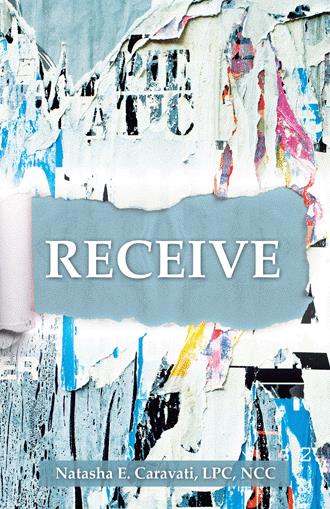
Book Cover & Preview Text
Introduction
I can’t do this. I will never get this right. I am not enough. Bad things will happen to me. I am unlovable. We have all had these thoughts, but they are not helpful. When our thoughts are unhelpful, they negatively impact our emotions and our behaviors. As a licensed professional counselor, I have worked with many clients over the years to help them process areas of worry and hurt in their lives. Often, I see clients struggling due to their unhelpful thinking.
I fully believe our minds were created by God, for God. “For in him all things were created: things in heaven and on earth, visible and invisible, whether thrones or powers or rulers or authorities; all things have been created through Him and for Him” (Colossians 1:16 NIV). God gave us the ability to think, and with those very thoughts, we can glorify Him. “And whatever you do or say, do it as a representative of the Lord Jesus, giving thanks through Him to God the Father” (Colossians 3:17 NLT). It’s biblical to think positively, but this can be hard if we are not aware or used to doing so. We can learn to become aware of our unhelpful thinking by praying over our thoughts, listening for the Lord, and recognizing thought patterns we may have that are unhelpful.
This book will describe the ten most common unhelpful thinking styles, using personal examples from my life and clients I have counseled. I too have struggled with these unhelpful ways of thinking, and through self-awareness and prayer, I have learned to manage them.
In addition, I will use examples from the Bible to help illustrate how these unhelpful thoughts are common and how the Lord interacted with those who struggled with them. Throughout the Bible scriptures show the patience of God toward his people and desire to help them grow and live as He intended. Jesus came to give us life, and life to the fullest (John 10:10) healed, whole, free, and reflecting His glory. Jesus invites us into this freedom daily, but often our minds distort this truth.
In counseling sessions, I use a Christ-based and Cognitive Behavioral Theory approach to help my clients become aware of their unhelpful thinking. We work together to untwist the unhelpful thoughts and find a way to make them more positive. I help them see that they are the author of their perspective, and that they have the ability to choose their thoughts.
In my sessions over the years with clients, I have noticed that unhelpful thinking styles are not common knowledge. There are a lot of books that explain how our thoughts affect our emotions. Few connect thought patterns to the Truth that thinking positively is something Jesus told us to do from the beginning. I felt encouraged after listening to a sermon to write down these unhelpful thinking styles to help explain them to those who were feeling lost and hurting.
The purpose of this book is to help share how positive thinking is biblical and scientifically proven to improve your mental health and quality of life. If you are angry, mad, sad, or anxious; dealing with low self-esteem; or feeling like everything is your fault, I invite you to read this book. I hope it will help you become self-aware of your unhelpful thinking so you can hand these thoughts over to the Lord and begin to think differently. It may also aid as a resource for your small group, friends, or loved ones. Anyone has the authority to change their thought patterns through prayer and self-awareness.
As you read, you will recognize many of these unhelpful thinking styles have overlapping characteristics. Similarly, the ways to overcome them also overlap and are explained more in the last chapter of this book. This application chapter will aid in helping you make the most of this book. At the end of each chapter, you will find a prayer prompt and a short script. I encourage you to modify this prayer to fit your unhelpful thinking and your own personal story.
This book is not intended to diagnose or treat anyone. If you feel you need professional help, I pray that you reach out to a qualified individual in your area and this book will be an additional tool for you.
Chapter 1
Labeling: College Major
The Example
I still remember where we stood when we had this conversation. We were right outside my freshmen college dorm. My sister was a fifth-year college senior, and I was one month into my first year. I started college out as a business major. Within three classes of Business 101, I knew it was not the best fit for me. I was exploring different options and briefly mentioned to my sister that I might want to pursue psychology so I could become a counselor to help people. Without missing a beat, she told me, “You can’t do that. You would be miserable”
“What? Why not?” I responded.
“Because you care too much about people, and you’re too emotional,” she said.
I believed her. I called my mom shortly after our exchange and mentioned how my sister felt I would be too emotional to help others through counseling. My sweet mom agreed. Therefore, I labeled myself as emotional. I changed my degree to sociology in hopes to become a lawyer for an international organization that stops sex trafficking. The irony is not lost on me: I recognize this too would be an emotionally demanding job. At the time, though, I thought that I could still help those who were hurting, because I “cared too much” to pursue counseling. I doubted myself based off a quick conversation. Gratefully, God pulled me out of my thoughts and aligned me back on the path He chose for me, even if at the time I labeled myself inadequate.
Formats

Book Details
About the Book
Our thoughts impact us more than we realize, and often can lead to anxiety, low self-esteem, doubt, and constant anger. In Receive, author Natasha E. Caravati uses her own personal stories, examples from past clients, and biblical texts to explain ten most common unhelpful thinking styles.
Caravati helps you understand how to catch these thoughts and give them to Jesus using a Christian and professional counseling lens. You will gain knowledge on how negative thoughts impact you and how to untwist your thinking to be more biblically sound, improving your mental health.
About the Author
Natasha E. Caravati, LPC, NCC, is a licensed professional counselor and a national board-certified counselor who has experience working with children, adolescents, and adults. She loves Jesus and is a devoted Christian. She resides in Richmond, Virginia with her family, and currently practices in an outpatient setting. Caravati is passionate about helping others see how positive thinking not only is Biblical but also scientifically proven to lead to a more well-rounded and healthier lifestyle.