
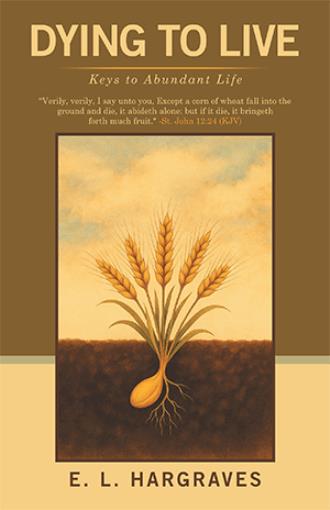
Dying to Live
Keys to Abundant Life
by
Book Cover & Preview Text
Chapter XI Dying To Live "For whosoever will save his life shall lose it; but whosoever shall lose his life for my sake and the gospel’s, the same shall save it." ~ Mark 8: 35 (KJV) The Divine Paradox: When we die to self, we live to God. In a world that clings to self-preservation as the ultimate virtue, the paradox of surrendering one's life to truly find it stands as a divine mystery. "For whosoever will save his life shall lose it; but whosoever shall lose his life for my sake and the gospel’s, the same shall save it" (Mark 8:35, KJV). This call invites us to step into the unknown, to release our grip on the temporal and embrace the eternal. When we die to our ambitions, our desires, and our fears, we are not losing ourselves—we are discovering our true purpose, aligned with God’s will. The journey of dying to self is not one of loss but of profound gain, as it awakens us to a life fully lived in the presence of the Almighty. The Daily Surrender Every day I get up and die, which I hope will become the only way I know how to live. This I do, that the God in me might reign in this body-of-death. My life is not my own, to do with what I will. But my will, I trust will be shaped by what God wills for me in this body. I pray that every fruit produced from it will be the manifest destiny of God, who has given life to be lived according to God’s will and purpose. That is why I am dying each day, to produce abundantly God’s will through me. My will must align with God’s for me to live the life God has called me to live for the sake of others. Three Methods of Dying (Luke 9:23-24) In this chapter, I want to explore the methods we use in dying to self. As Jesus told His disciples, “If anyone would come after Me, let him deny himself, take up his cross, and follow Me.” Each of these actions—denying oneself, bearing the cross, and following Christ—represents a profound form of surrender, the very essence of spiritual transformation. Surrender is not merely about giving up; it is about yielding completely to God’s purpose. In releasing control, we step into the mystery of dying to self—a paradox where loss leads to gain, and surrender brings strength. Through this sacred process, we uncover a deeper truth: dying to self is the key to truly living. From the moment Jesus entered this world, He was on a journey toward the cross—a place of ultimate surrender and sacrificial death. And so, as we dive into the dimensions of Dying to Live, we will explore the six aspects of surrender that shape the believer’s path to transformation. Dying to Live: The Six Dimensions of Surrender 1. Deny Yourself: A Type of Dying (Philippians 3:7-8) Paul’s declaration in Philippians 3:7-8 shifts the focus from worldly success to spiritual gain: “But whatever were gains to me I now consider loss for the sake of Christ.” To deny oneself is to willingly relinquish personal ambitions, desires, and even comforts for the sake of Christ. It is a kind of death—not a loss of identity, but the shedding of anything that competes with God for control over our hearts. • The Illusion of Control: Many people believe self-sufficiency is strength. Yet, real freedom comes not from grasping tighter, but from releasing control. When we cling to our own wisdom, we limit what God wants to do in and through us. • Releasing Personal Rights: Jesus himself declared, “Not my will, but Yours be done” (Luke 22:42). Can we dare to pray the same in moments when our plans clash with God's direction? • The Call to Radical Discipleship: This surrender doesn’t mean passive faith—it means stepping into purpose. True discipleship requires yielding everything: ambitions, relationships, even our preconceived notions of success, trusting that losing our life for Christ is where true fulfillment lies. 2. Forgive Yourself: A Type of Dying (Romans 8:1 & 2 Corinthians 5:17) There’s an unseen weight that burdens many believers—not just the struggle to forgive others, but the challenge of forgiving themselves. Romans 8:1 declares a bold truth: “There is therefore now no condemnation for those who are in Christ Jesus.” Yet so many still walk as if shackled by past mistakes. • The Weight of Past Mistakes: Why do we hold onto guilt for what God has already wiped clean? Many are imprisoned by memories, replaying failures over and over, reluctant to accept full redemption. • Walking in the New Creation: 2 Corinthians 5:17 assures us that we are new creations—so why do we insist on living as if we are still bound by the old? • Letting Go to Move Forward: Self-forgiveness is an act of faith, of accepting what Jesus already accomplished. Dying to self includes dying to the version of yourself that refuses to be free.
Formats

Book Details
About the Book
In Dying to Live, E.Livingston Hargraves invites readers into a transformative exploration of abundant living through Christ. She illuminates the divine paradoxŠtrue life is found not in grasping for more but in surrendering all. Grounded in biblical wisdom, Edna reveals the five aspects of abundant living, physical, mental, spiritual, social, and financial, showing how each is redeemed through Christ's sacrifice. With rich theological depth and pastoral insight, she dismantles the enemy's tactics, guiding believers toward the fullness of joy, peace, and divine purpose. This book is more than a call to faith, it is an invitation to step boldly into God's promises. Whether battling discouragement or longing for deeper fulfillment, readers will discover that abundant life is not reserved for heaven but available now. Jesus' words, "I am come that they might have life, and that they might have it more abundantly" (John 10:10), become a living reality for all who choose to embrace God's overflowing grace.
About the Author
E. Livingston Hargraves is a pastor, theologian, and preacher deeply committed to sharing the transformative power of God's word. Holding an M.Div from SMU Perkins School of Theology, she is a member of The Compelling Preaching Initiative Cohort and serves as the pastor of Hunter UMC in Little Rock, Arkansas. Her writing reflects her passion for biblical truth, spiritual restoration, and compelling preaching, offering wisdom that both challenges and uplifts. In Dying to Live, Hargraves' voice is both prophetic and pastoral, calling readers to walk in the abundance God has already provided..